

John Szabo’s Fizz Buyers Guide 2026: The True North Strong and Fizzy
By John Szabo MS, with notes from David Lawrason, Sara d’Amato, Megha Jandhyala, and Michael Godel
Welcome to WineAlign’s annual Fizz Buyers Guide, and a toast to drinking less but better. The numbers tell the story: prices keep climbing, for Champagne and Cava especially; cheap fizz is vanishing from the shelves (without our help); Prosecco and Cava have all but disappeared from our tasting table; and ancestral (pét-nat) is finally extinct, having exemplified some of the worst-value bubbles in past years. In their place? Canada. More than four in five of the wines we tasted this year were Canadian, and the best of them, from toasty, late-disgorged blanc de blancs to bone-dry Niagara rosés, deliver real quality at prices that have climbed far more slowly than the imports.
Then there’s Fracette, a new category of Ontario sparkling wines made with a splash of icewine and aimed squarely at Prosecco. What is it, where did it come from, and is it any good? I have the answers.
The WineAlign Crü was all hands on deck this year for tastings, and we have 27 wines to recommend, priced from $16 to $125, including five triple alignments and one quadruple, which should cover every occasion. Open the full report and fill your holiday shopping list with fewer, better bottles.
Or, more convenient, order the The True North Strong and Fizzy collection of 12 sparkling wines, which will be delivered to your door (or to a friend’s door) before the holidays. This case is filled with our collective top Ontario sparkling wine picks (6×2). Sales end on Sunday November 22nd, as of writing we have only 15 cases left available, so don’t tarry!
From the Crü at WineAlign, we wish you very safe and happy holidays.
Advertisement

Advertisement
Jump straight to the Fizz Buyers Guide:
Canadian Traditional Method
Canadian Traditional Method Rosé
Champagne
Other Traditional Method (Cava, Franciacorta, Crémant, etc.)
Charmat Method/Cuve Close/Prosecco et al.
Sparkling Red
Sparkling Wine Market: What Seven Years of Submissions Tell Us
I’ll spare you a full statistical treatment, but a look back through the wines submitted to our fizz tastings since 2019 (minus Covid-era 2020) reveals a market that has changed shape, and this year’s submissions push every trend further. Canadian sparkling has gone from about one in five submissions in 2019 to more than four in five in 2026 (67 of 81 wines), with blanc de blancs, the clearest sign of Ontario’s growing ambition, climbing from a single entry in 2019 to 14 in each of the last two years.
Prosecco and Cava, meanwhile, which together made up nearly half the 2019 list, are down to just four wines in total, and cheap fizz is generally vanishing: wines under $25 made up two-thirds of wines tasted in 2019 and only 16% this year. Reading between the lines, which is always speculative, volume imports at the entry level seem to be moving fine on their own and don’t need us (or more probably, importers have realized there’s little point in sending them to us for consideration, picky as we are), while Ontario producers and the occasional Champagne house (13 submissions in 2023, five this year) see WineAlign as a useful way to get consumer attention for wines that need an introduction or a push, whether that’s a bottle-fermented blanc de blancs, a lesser-known appellation, or a brand-new category like Fracette, of which four of the six launch wines (Kew, Henry of Pelham, Saintly and Inniskillin) landed on our table. More on Fracette, a new category of Ontario sparkling, below.
Prices are the other part of the story. The median price of the wines we tasted rose from $19.95 in 2019 to $36.95 this year, an increase of 85%, and the average from $28 to $43. Part of the increase is due to rising prices across the board, though some of it is simply due to a higher percentage of more serious bottle-fermented wines arriving at WineAlign HQ, and fewer sub-$25 bottles.
The like-for-like comparisons are more telling, and they split along geographic lines. Imports have taken the hit: Taittinger’s Brut Réserve, which sold for $75.80 in 2023, is $91.15 this year, up 20%. The Prestige Rosé went from $88.95 to $103.55, up 16%. Cava, once the reliable bargain, has inflated the most, with Parés Baltà’s B Brut up about 40% between 2022 and 2025, from $16.95 to $23.92, and Mas Codina’s Reserva Brut Nature climbing 20% in a single year, from $25 to $29.95. We can partly blame the strong Euro. (Prices include HST and bottle deposit.)
Ontario’s stalwarts, meanwhile, have been slower to move: Cave Spring Estate Blanc de Blancs has sat at $33.95 at the winery since 2022 and Tawse Limestone Spark Rosé at $31.15 since 2024. This underscores the tremendous value of local bubbly that we at WineAlign have been touting for several years now. There are no fewer than 19 Ontario sparkling wine recommendations in this year’s buyers guide.
Some entry-level Prosecco, by contrast, hasn’t budged: Val d’Oca has hovered between $17 and $20 for five years, for example. And Prosecco is the stated target competition of Fracette, which, at $23 to $35, is slightly more ambitiously priced.
As I wrote previously, the fizz tasting has historically been one of our most demanding tastings of the year, with much effort spent sifting through countless lower quality wines offering little more than shrill acids and residual sugar (as in 2019). This year’s tasting was a genuine pleasure. Fewer wines of higher quality to taste through, yet just as many wines recommendable wines as in years past when there were far more submissions. That’s a win-win-win for all.

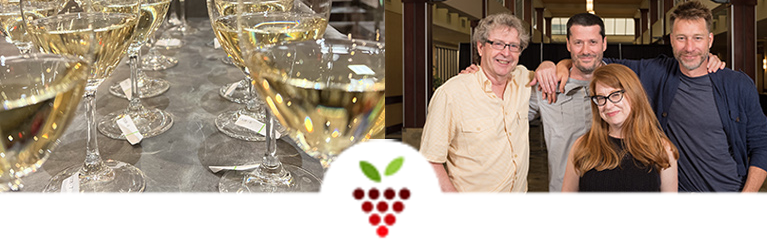
The tasting table at WineAlign HQ. Over 100 wines, 80 of them sparkling. Two days of tasting.
Fracette: A New Ontario Sparkling Category
You’ll notice a new word in the Fizz Buyers Guide this year: Fracette (rhymes with cassette), the latest addition to the VQA Ontario sparkling wine family and, to my knowledge, a category with no equivalent anywhere else in the world. The name blends “frozen” and “facet,” a nod to the icewine at its heart and, according to the press materials, to the complexity it brings to the glass.
The idea is simple enough, even if the logic is a little perverse: rather than adding the usual mix of plain old sugar and yeast (called the liqueur de tirage) to the bottle to kick off the second fermentation, winemakers use icewine as the sugar source. The yeast consumes it all, so the wine finishes dry, with traces of the icewine’s concentrated flavour — theoretically — lingering on. The producers promise “layers of citrus and orchard fruit, a subtle richness and a fine mineral thread.”
As for how it came about, it’s a logical marriage of two of Ontario’s great strengths, icewine and sparkling wine. It has some precedent in the likes of Peller’s Ice Cuvée, which adds a dose of vidal icewine to the finished bottle. But make no mistake, Fracette is a deliberate commercial development, designed to face Prosecco head-on. According to Fracette producers, Prosecco commands more than a third of sparkling occasions and keeps climbing at double-digit rates, gaining popularity especially among younger drinkers untethered to tradition and open to trying something new.
Fracette producers are betting they can carve out a share of that market, and re pitching the product as a bright, modern, crisp and refreshing bubble for everyday enjoyment, the 57% of sparkling moments that have nothing to do with a special date. It’s “the bottle you open on a Tuesday,” in the words of the press release. Like Prosecco, it’s made using the tank method (Charmat/Martinotti/cuve close), and priced to compete.
The Ontario Wine Appellation Authority (the former VQA Ontario) floated the idea in the summer of 2025 and amended the regulations that November, making Fracette a protected category in the spirit of Nova Scotia’s Tidal Bay. The rules are refreshingly few: a vinifera base wine (vidal icewine is the lone hybrid exception), icewine as the tirage liqueur, no more than 15 g/L of residual sugar, and “Fracette” on the label. Bottle fermentation is permitted, but the first crop is all tank method. Six wines arrived together in September from a coalition of three producers, led by Arterra with three brands, Inniskillin, Saintly and Kew, along with Andrew Peller (Peller Estates and Thirty Bench) and Henry of Pelham. As I understand it, the idea was hatched at Kew.
What can you expect in the glass? Not a sweet wine, despite the icewine connection. Pitched as Brut-style, though the rules allow up to 15 g/L, Fracette wines run from dry to just off-dry, in the range of extra dry Prosecco, with a simple, fruity profile, and at most a faint trace of icewine (if you go looking for it). Think of it as a fruity, aromatic tank-method sparkler with a little more flavour concentration than the average, more appropriately priced around $24 rather than the $35 asked by the most aggressively priced Fracette wine. It isn’t trying to compete with traditional method wines for complexity, and shouldn’t; it’s an aperitif, a wine for easy sipping and gathering. It’s early days, but a promising start, and distinctly Canadian. See Kew’s Fracette in the Charmat section below, the best I’ve tasted in the category so far.
Read on to compose your holiday shopping list.
Categories:
Canadian Traditional Method
Canadian Traditional Method Rosé
Champagne
Other Traditional Method (Cava, Franciacorta, Crémant, etc.)
Charmat Method/Cuve Close/Prosecco et al.
Sparkling Red

Fizz Buyers Guide 2026: Canadian Traditional Method

Tawse Spark Brut 2021, Ontario, Canada
$27.95, Tawse (LCBO)
Michael Godel – Rising beat of the Spark, first conceived, and adjusted from year to year by the late great Paul Pender, now solidified and persistently styled by Jessica Otting. Exotic stuff.

Kew Barrel Aged Blanc De Blanc 2019, Ontario, Canada
$32.95, Arterra Wines Canada (LCBO)
David Lawrason – Kew is an understated, value producer of Niagara traditional-method sparklers. This charmer shows a lovely core of classic apple/pear chardonnay fruit that stays focused nose to finish. There are also creamy, almond and pastry aromas providing complexity. It is light to midweight, and soft yet lively, with fine acidity. So easy but not simple.

Hidden Bench Chantilly Extra Brut 2023, Ontario, Canada
$35.00, Hidden Bench Estate Winery
David Lawrason – This is a style not often seen in Canada — a traditional-method sparkling riesling aged 20 months on lees. So don’t expect a lot of yeasty/autolytic character, but do expect quiet, confident elegance and evenness. There are complex aromas of pear, lemon, fine herbals and subtle bread crust. It is light bodied with a very fine mousse, tidy acidity and chalky minerality.

Redstone Blanc De Blancs 2020, Ontario, Canada
$39.15, Redstone Winery
Michael Godel – Blanc de blancs of age, and with age comes the wisdom of mature chardonnay. Toasty, baked brioche in the classic growers’ Champenoise way, and with conviction.

Hinterland Blanc De Blancs 2021, Ontario, Canada
$39.95, Hinterland Wine Company
Michael Godel – A great name for a wine, in so many respects, including the great fortune it brings to the glass. So many grapes, with texture and intrigue. Still in very good shape, with at least six months to a year of fresh drinking pleasure guaranteed.
Megha Jandhyala – Hinterland’s 2021 Blanc de Blancs is a beautifully nuanced traditional method sparkling wine, with undulating layers of flavour, including dried fruit, roasted nuts, caramel, and toasted brioche. Its texture is particularly appealing too, reminding me of creamy and silky, but fresh and sprightly, seafoam.
John Szabo – Hinterland’s 2021 Blanc de Blancs tacks in an appealingly toasty, aldehydic direction in 2021, which is to say with an almost Fino sherry-like nutty/yeasty quality; complex, intriguing. The palate is fullish and satisfying; mouth-filling, with fine effervescence nicely enmeshed in the ensemble, and excellent length. The mature flavour profile might not be everybody’s flute of sparkling, but the depth and concentration are undeniable. I’d be serving this at the table with a rich fish or poultry dish, terrine, or soft cheese. It’s not so much for the aperitif hour.

Thirty Bench Sparkling Riesling, Ontario, Canada
$40.00, Andrew Peller Limited
Megha Jandhyala – Impeccably balanced with radiant acidity and delectably fresh and crisp flavours of orchard and citrus fruit, this sparkling riesling is full of varietal character and appeal.
Sara d’Amato – A National Wine Awards of Canada gold medalist, this traditional method riesling spent 14 months sur lie and is just beginning to reveal a hint of petrol. This is the most welcoming riesling gets, yet still with a nervy structure. It delivers a surprising amount of varietal character in a style where technique can easily steal the show.
Michael Godel – Watching 10 years of sparkling riesling evolution has been fascinating. More substance than ever before, a fulfilment on the mid-palate, and a flavour profile that speaks in riesling vernacular better than before.

Creekside Queenston Road Vineyard Blanc De Blancs Reserve 2019, Ontario, Canada
$45.15, Creekside Estate Winery
David Lawrason – This buxom bubbly is 100% chardonnay fermented and aged in French oak, then aged another five years en tirage in bottle. The result is deeply coloured brassy/golden sparkler with a very forward, complex nose of ripe pear, cashew, honeycomb, hay, vanilla, and toasty notes. It is medium bodied, broad and mouth-filling, yet balanced with fine acidity and mousse. It finishes dry but is not austere.

Cave Spring CSV Blanc De Blancs Brut 2018, Ontario, Canada
$49.95, Cave Spring Cellars
Sara d’Amato – Cave Spring’s nervy 2018 classic is bone dry in brut nature style, with little to no dosage to soften the edges. Yet austerity is far from the whole story. Time in bottle has brought added dimension to the wine’s inherent complexity, drawn in part from CSV, the winery’s oldest vineyard and among Canada’s oldest producing vineyards.
John Szabo – Straw gold in colour with mature aromatics to match, offering toasted wheat bread, blond caramel, almonds and white chocolate in a complex and impressive presentation. The palate is still notably energetic and youthful with its lively effervescence and crunchy acids framing a very dry palate. Length and depth are excellent. Top notch bubbles here, ready to enjoy but no rush either.

Queenston Mile Grand Mile 2019, Ontario, Canada
$49.95, Queenston Mile Vineyard
John Szabo – The culminating bottling to the blanc de blancs and the blanc de noirs, this estate chardonnay and pinot noir blend delivers a broad and complete set of aromas and flavours covering a full range of toasty autolytic notes, mature, autumnal fruits, scorched citrus zest and binned apples in the traditional-method spectrum. Acids are sharp on a dry frame with a solid flavour core that lingers impressively. A stirring wine, among Queenston Mile’s best to date to be sure.

Tawse 25th Anniversary Spark, Ontario, Canada
$50.15, Tawse Winery
Megha Jandhyala – This exceptional sparkling wine is made with pinot noir from 2011 and chardonnay from 2013. It is an opulent celebration of flavour that simultaneously demonstrates complexity and finesse. Given it costs just over $50, I would buy two bottles of this wine for the price of a bottle of good Champagne.
John Szabo – A bit of a marketing miss, Tawse neglects to reveal some salient details describing this celebratory wine on the label, saving it instead for the distant corners of the website, where one learns that the wine was made “in honour of our 25th anniversary” in the traditional method, with zero dosage (making it extra brut). It’s a blend of 85% pinot noir from 2011 and 15% chardonnay from 2013. The advanced age of the wine is evident from the toasty, mature fruit and autolytic character; also from the smooth, succulent, highly sapid and saliva-inducing palate, with excellent length and depth. Reflecting on the long finish and evident depth and complexity of flavour, I’ll say that the price does the wine little justice: a cuvée of this type can and should command more. The marketing department’s misstep is our gain in this case — the wine is worth more than they seem to know.

Trius Showcase Blanc De Blancs Brut Late Disgorged 10 Year, Ontario, Canada
$73.68, Trius Winery
Michael Godel – Three months forward with a view to consistency, perpetual motion and not much that has changed. The flavour profile is extraordinary, exhibiting a breadth to speak for the 10-year effort and what impressive result has come about.
David Lawrason – This has spent an incredible 10 years on its lees in bottle, and shows a lovely, classic mature nose of toasty sesame-seed–bagel nose, with barley sugar, onion crisp and fine spice. Very complex and interesting aromatics. It is light bodied, dry and firm, with impressive intensity and excellent to outstanding length.
Megha Jandhyala – Having spent a decade on its lees, this Trius is a model of sophistication, concentration, and complexity. Its rich autolytic character of brioche and almond croissants is riveting, as are its notes of fresh and dried fruit and caramelized lemons.
Sara d’Amato – Trius’s late-disgorged brut spends an impressive 10 years on the lees, yielding a deeply toasty profile of roasted rice and crème brûlée, but not the sweet vector. A flicker of charred, torched grapefruit adds a welcome bitter-edged complexity. There’s lovely breadth and development here — mature, yes, but nowhere near over the hill.

Divergence Hughes Vineyard Blanc De Blancs 2020, Ontario, Canada
$75.00, Divergence Wines
Sara d’Amato – Ontario has no shortage of impressive sparkling wines but keep an eye on this relative newcomer. Founded in 2022 by chemical engineer turned winemaker Jeff Moote (a graduate of the Cool Climate Oenology Institute at Brock University in Niagara, Ontario), Divergence is making a splash with traditional-method fizz from Lincoln Lakeshore. Precise and complex, this single vineyard blanc de blancs is taut and mineral with a mere 2 g/L dosage to keep things nervy.

Henry Of Pelham Cuvée Catharine Centenary Estate Blanc De Blanc 2017, Ontario, Canada
$124.95, Family Wine Merchants
Sara d’Amato – This 2017 Cuvée Centenary spent eight years (or 100 months) on the lees, delivering the charm of vintage Champagne. A gentle oxidative patina brings honeyed nuance to the palate. There’s lovely flesh and viscosity here, without relying on dosage for weight, and the balance is spot-on. A compelling glimpse of what extended lees ageing can achieve in Niagara.
David Lawrason – This top drop of hand-harvested 2017 estate chardonnay is made from free-run juice. It was aged on its lees for almost eight years but has retained a remarkably youthful pale gold appearance. The nose is very intense, with dried apple, lemon loaf, vaguely honeyed, and nutty aromas. It is light to medium weight with firm, grippy acidity, fine effervescence and great flavour intensity and length.
Fizz Buyers Guide 2026: Canadian Traditional Method Rosé

Henry Of Pelham Cuvée Catharine Rosé Brut, Ontario, Canada
$29.95, Family Wine Merchants
John Szabo – The latest Cuvée Catharine Rosé Brut (Lot# 07921A0452) is a lovely, creamy, well-balanced wine that comes across as quite dry if not bone dry. Acids are relatively gentle and creamy, shaping up the raspberry-red cherry-citrus flavours. Length and depth are very solid for the money. A top notch sparkling rosé value, tough to beat in Canada — and the world for that matter.

Trius Brut Rosé Sparkling, Ontario, Canada
$26.95, Andrew Peller Limited
John Szabo – Another fine iteration of Trius’s classic traditional-method rosé, this latest bottling shows an appealing mix of red berry fruit and toasty/yeasty complexity, as well as florals and citrus, on an essentially bone-dry frame. The palate is nicely balanced and crisp, fresh, and lively, with above average depth and complexity in the rosé category. Lovely stuff and lovely value all around.

Huff Estates Cuvee Janine 2022, Ontario, Canada
$39.95, Huff Estates
David Lawrason – This pinot noir/chardonnay blend was aged 24 months en tirage. It pours bright, almost fluorescent and fairly deep salmon pink, with a pure and sweet nose of sour cherry jam, florals, and gentle strudel-like pastry. It is light weight and very nicely balanced with both firmness and liveliness, and full flavours. The length is excellent.
Michael Godel – An enrichment of riper-than-the-average-vintage fruit; well-structured and an equilibrium struck between all constituent parts. Terrific composition from start to finish.
John Szabo – This has developed terrific aromatics since last tasting, shifting into a creamy red raspberry purée–inflected wine expression. Length and depth are very good to excellent. Still in great shape.
Fizz Buyers Guide 2026: Champagne

Collet Art Déco 1er Cru Brut Champagne, Champagne, France
$74.95, The Vine Agency
David Lawrason – From the five-generation house of Collet, this “Art Deco” is based on the 2020 vintage with chardonnay and pinot noir from Premier and Grand Cru sites. It’s a lovely, typically slender, taut yet very flavourful Champagne. The nose is upfront and well-integrated with dried apple/pear fruit, peanut brittle and sweet hay/wildflower notes. It is light to medium bodied, elegant and energized with vague pastry sweetness on the finish.
Sara d’Amato – Collet’s Premier Cru Champagne makes a sharp visual statement with its black-backed Art Deco label, evoking the 1920s aesthetic the Champagne industry helped popularize. A natural centerpiece for any festive table, it’s equally compelling in the glass. Voluptuously rich and an immediate crowd-pleaser, it offers more than easy charm.

Champagne Collet Origine Brut, Champagne, France
$78.16, The Vine Agency
John Szabo – A little more upright and forthright, also drier than Collet’s more whimsical Art Déco Brut cuvée tasted alongside, the Origine has nicely contained lines and shapely form, framed by comfortably ripe acids. I like the sweet brioche and shortbread biscuit flavours, not to mention the long finish. Lovely, elegant champagne.

Taittinger Brut Réserve Champagne, Champagne, France
$91.15, Family Wine Merchants
Sara d’Amato – A pleasantly creamier, more generous rendition of this cuvée that features toasty warmth and richly textured mousse. Dried florals and a hint of ginger add aromatic intrigue. A benchmark NV with both precision and polish.
Fizz Buyers Guide 2026: Other Traditional Method (Cava, Franciacorta, Crémant, etc.)

Engels Cremant D’Alsace, Alsace, France
$34.95, Airen Imports
David Lawrason – Not all sparkling has to be lean and linear. Made from pinot gris and pinot blanc grown on clay-limestone, this wine for those who relish fruit. Here’s a fulsome, barely off-dry crémant presenting a ripe, rich nose of peach jam, wildflower, honey, and fresh-baked cookies. It is medium bodied and rounded yet carries firm acidity and vigorous effervescence. Complete and well made.

Domaine Baud Blanc De Blanc Brut, Jura, France
$43.34, Nicholas Pearce Wines Inc.
Sara d’Amato – This traditional-method sparkling chardonnay comes from the remote, rocky, high-elevation Jura, wedged between Burgundy and Switzerland. Generous yet clean, it leans pleasantly conventional in the best sense. It’s balanced with notes of lemon and grapefruit, quite flinty with a lick of crème fraîche alongside honeycomb and chamomile, and delivers an electric finish.

Simpson Estate Chalklands Classic Cuvée, England, World
$67.20, Buyers + Cellars Wine Merchants
Megha Jandhyala – From chalky soils in the North Downs of Kent comes this classic, compelling traditional-method wine. I love its intensity and focus, and also its creamy but tart dry palate and finish. I would buy a bottle of this alongside one of the other stellar Ontario sparkling wines my colleagues and I have recommended for a fun comparative tasting.
Michael Godel – Most intuitive and frankly interesting, all together layered, integrated, and come fully together. Truly impressive showing from an English sparkling. Great find, grand jour.
Sara d’Amato – From the chalklands of Kent, the same vein of limestone that runs under Champagne, Simpson Estate’s flagship traditional-method sparkling wine blends chardonnay, pinot noir and pinot meunier across three vintages, with 15 to 18 months on the lees. Polished, pleasingly creamy and plush, yet firmly dry, it offers a generous feel without losing its footing.
Fizz Buyers Guide 2026: Charmat Method/Cuve Close/Prosecco et al.

Sacchetto Fili Prosecco Brut Millesimato 2024, Veneto, Italy
$16.95, Woodman Wines & Spirits
John Szabo – Good clean, crisp, citrusy fun here at a sharp price, about as good as most Prosecco at higher prices. I even like the slight lemon-lime zest and pith bitterness on the finish. Chill well, crack and go without contemplation. Nice package, too.

Hinterland Whitecap 2025, Ontario, Canada
$23.25, Noble Estates Wines & Spirits Inc. (LCBO)
Michael Godel – At the top of the Charmat-method Canadian wine heap. Apropos for the definition of a “frothy, white foam crest that forms on an ocean or lake wave when the wind blows hard enough to make the wave unstable and break.”
Sara d’Amato – A favourite by-the-glass pour, this Charmat-method riesling-vidal blend from Prince Edward County’s sparkling specialist has plenty of pep and intrigue. Green apple, starfruit, ginger, and blossom lead on the nose, with a flicker of white pepper. Lively and pure, it delivers a welcome step up in flavour intensity and complexity for the style.
John Szabo – Hinterland’s workhorse Charmat-method, vidal-based bubbly is a perfectly clean and fresh, lively, just off-dry sort of everyday sparkler, which is exactly what it was intended to be. Don’t contemplate too deeply, just chill and enjoy over the near term — lots of simple pleasures here.

Kew Fracette Sparkling 2025, Ontario, Canada
$26.95, Arterra Wines Canada (LCBO)
Sara d’Amato – Crafted with Icewine to kick off the second fermentation — according to the new category style of “Fracette” — this Charmat-method sparkler offers a cornucopia of tree and tropical notes with hints of honey. If you are searching, you might be able to discern some faint traces of icewine but this is not necessarily the intention of the wine. Its nervy acidity balances any sweetness well, lending a dry finish of good length.
John Szabo – The idea of sparking a secondary fermentation in tank with an icewine addition was hatched at Kew, so it’s not surprising to see the new “Fracette” category name prominently displayed on the front label of this 2025 inaugural (official) vintage. And the wine is good, the best I’ve tasted yet in the category, just off-dry (similar to many commercial Proseccos) and with the impression of sweetness enhanced by prominent fruit and perfumed fruity fragrance. It’s well-balanced and immediately, and widely, appealing. The finish lingers nicely as well. An afternoon sort of wine for sipping over casual conversation; nothing too complicated in the glass to distract.
Fizz Buyers Guide 2026: Sparkling Red

Medici Ermete & Figli Arte E Concerto Lambrusco 2024, Emilia Romagna, Italy
$22.95, Profile Wine Group (Vin Vino) (LCBO)
Sara d’Amato – And now for something different. Lambrusco has had a moment in Toronto and Montreal with multiple consumer and trade events this week, but these characterful, budget friendly bubblies remain underrepresented on our shelves. Concerto is a pioneering single-vineyard vintage Lambrusco from a producer instrumental in reviving the category. Made entirely from Lambrusco Salamino, it is just off-dry and juicy, with gentle bubbles and invitingly curbed tannins.

Broken Stone Vie En Rouge Traditional Method Red 2021, Ontario, Canada
$44.95, Broken Stone Winery
John Szabo – This is a bottle-fermented blend of gamay and pinot noir from Broken Stone’s PEC estate vineyard. I find it a unique, fully red-coloured sparkling wine with plenty of varietal character, tart red berry fruit and gentle floral/dried rose elements emerging as it continues to develop. The palate is bone dry, sharp and tart, with a pleasantly sour edge (you’ll have to love acids to get into it). It would be best served at the table with salty protein: roasted duck breast or turkey (with cranberry sauce) come to mind. Something different to try that will get the conversation flowing no doubt.
That’s all for this special fizz report. See you ’round the next bottle.

John Szabo, MS
